CREATE YOUR OWN EMOM
Create your own EMOM:
A buddy and I text regularly about our workouts. (My text history is actually chocked full of fitness conversations with a number of people.) Today an EMOM workout was brought up; EMOM comes up quite regularly with this person, in fact. That spurred me to create this post.
First, what is an EMOM? For those unfamiliar with the acronym, it stands for “Every Minute On the Minute”. How it works: you select an exercise or two and an accompanying exercise scheme. For example, push-ups for 10 reps and sit-ups for 10 reps. Next, you choose a timeframe. For example, 15 minutes. Now, the fun part — the work! Start your clock and execute 10 push-ups followed by 10 sit-ups, then rest the remainder of the minute. At the start of the following minute, again execute 10 push-ups followed by 10 sit-ups, and once again rest for the remainder of the minute. You’ll continue this process until your allotted time (in this example, the 15 minutes) is up. If you get to a point where you can no longer perform the listed work, decrease the number of repetitions; this will rest the muscles some and provide the body with a little more time to recoup.
Create your own EMOM: my friend and I love to incorporate one moderate-weight compound exercise followed by a bodyweight exercise. Why? The weighted exercise provides an excellent stimulus on the entire system while taxing a particular group of muscles. The paired bodyweight exercise does the same, but not to the extent the weighted movement does. In addition, this back-to-back, weight-bodyweight pairing heightens the cardiovascular system, thus increasing the heart rate (you take in more oxygen and burn more calories).
Some favorites: 5 deadlifts followed by 10 push-ups. (If you want to torch the back, replace push-ups with pull-ups; you’re unlikely to make it long with this combination.) Or, there’s 5 overhead presses followed by 10 air squats. (Going from upper body to lower body — or vise versa — enables the system to recoup some, even though you’re working.) There are a TON of combinations, and a number of good combinations. One exercise at a time can be used; three exercises at a time; a weighted exercise and a run... The list goes on and on. It simply comes down to what you want out of the workout. I’ll say this: if you’re picking a weighted compound movement — deadlift, squat, power clean, etc. — err on the side of caution with the rep scheme; when it comes to bodyweight exercises or dumbbell/kettlebell exercises, there’s room for higher reps.
Choose wisely, friends... And #growstrong!

FITNESS JOURNEY AND THE STOCK MARKET
Our fitness journey is like the stock market. (Bear with me.) Both have a start point and an end point -- or, a where-we-are-now point; both seek to improve; both have highs and lows; both come with times of struggle and triumph.
Take a look at the chart and really examine it for a minute. What do you see? You see gradual, incremental improvement over time; you see a steady climb to the top! The stock market didn't increase in value over night -- it took years. It didn't quit or cease to exist because it had a "bad" season. It continued to exist; it turned itself around, and it continued the climb.
There will be ups and downs during our fitness journey. It's inevitable. The key is to not give up when things get tough, when things take a downturn. It's at those times we must dig deep and fight especially hard; know that it's just a season and there is something better around the corner. With grit and perseverance our circumstances can change.
Do you want your fitness to land on the green circle? Do you want to reach your goals? Then fight through the red arrows; don't let the down times determine your failure or success. Know that it's a process to the top; a painstaking process to get to where it is you want to go. Embrace the process. Don't quit. Now ... #dowork!

Nation Wide
The word is spreading... Our goal is to grow strong bodies nation wide, and thanks to you progress is being made. We appreciate you for letting us be a part of your fitness journey!

KEEP THE WEIGHT OFF
What's the trick to losing weight? Well, according to a collection of data from over 10,000 adults, The National Weight Control Registry concluded that those who successfully keep off weight have the following behaviors:
*98% of participants modified their food intake in some way
*94% increased their physical activity (with 90% exercising an average of about 1 hour per day)
*78% ate breakfast every day
*75% weighed themselves at least once a week
*62% watched less than 10 hours of TV per week
So, it's not necessarily a trick, it's more so tricks. And, of course, we all respond differently to diets and exercise. But if weight loss is your goal, there is definitely something to be said about the NWCR findings.
Check it out at: http://nwcr.ws/research/default.htm
Diet
Last week I got into several discussions about my new "diet," so I thought I'd elaborate on it some here:
(Before going further, let me underscore that I'm *not* a dietitian or nutritionist -- claiming to be an expert on this matter or telling you what to do with regard to your diet would be negligent on my part. I'm a trainer, a coach -- fitness is where my expertise lies. I'm simply telling you what I'm doing, how it's working for me, and why I'll continue to pursue my strategy.)
The diet:
Monday - Friday, from the moment I wake up until 5pm, I stick to a liquid, vegetable, and fruit diet. After 5pm, I eat as I always have. Saturday and Sunday, I eat as normal -- as I always have. Weekday example:
Breakfast: Cookies and Cream protein shake, with banana, spinach, skim milk, and ice.
Lunch: Vanilla protein shake, with strawberries, banana, spinach, skim milk, and ice.
Afternoon snack: One of the above shakes -- depending on what sounds best.
In between the shakes I typically have an apple or two, maybe some baby carrots.
After the 5pm hour: No rules. Whatever sounds good, I eat. (Don't get me wrong, I'm not shoving whole pizzas and a bucket of fried chicken down my throat...)
This diet has limited my fat and poor-food-choice intake (not to mention limiting my sodium, cholesterol, and processed-foods intake, and increasing my fiber consumption); it has helped me to consume meals in moderation; my digestion has improved; and, in only a week's time, I can see bodily improvements. Another benefit: I've saved a little money -- buying protein, fruits, vegetables, and milk in bulk has been good on my wallet! Oh! My workouts... They've been great! I really haven't skipped a beat. I'm full of energy (that is relative, might I add, as my newborn son likes to keep me up at odd hours during the night)!
To wrap up this post, what I'm getting at is this: we all can make healthy changes, and those changes don't have to be incredibly drastic or completely disrupt our lives. Small steps equal progress. Whether it's a new diet tweak or it's adding (more) exercise to your daily routine, it can be done. It just takes some willpower; but, believe it or not, after some time that willpower turns into habit, and it really does't take that much effort. In time, you may begin to enjoy it! The best part: it's good for you! It's adds to your life; it can make you a stronger all-around person.
The Bale
Here's an update: We've been working with a number of companies on bale specs and prices. We found a manufacturer that seems to be a great fit! Samples are being sent tomorrow. Once we receive the product *and it meets our lofty requirements and expectations* we plan to go to market. We'll try to get it to you at an affordable rate.

No Excuses
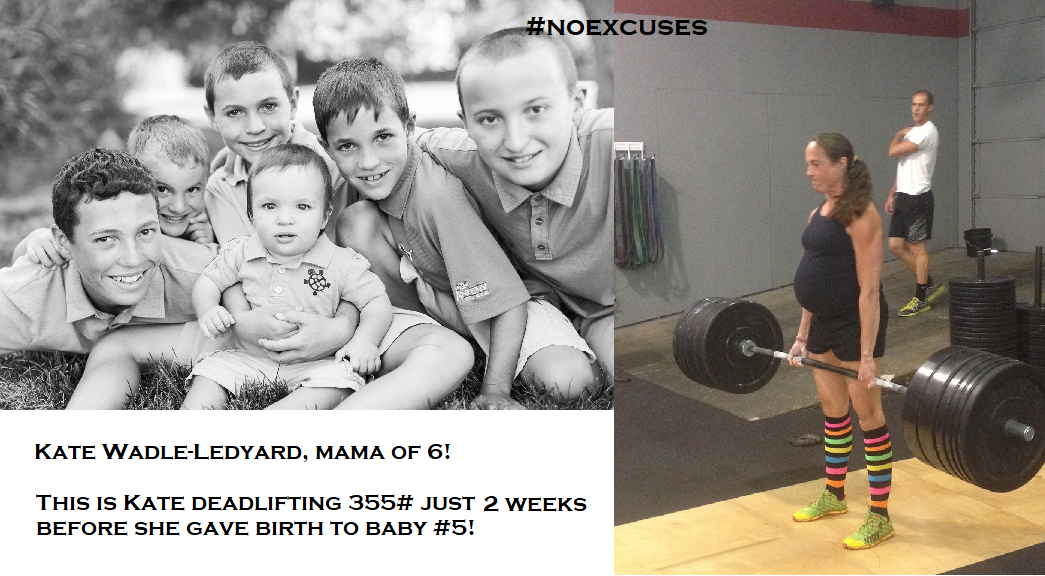
“Pushing past comfort is important, and this is where we realize we are capable of more. I truly believe the discipline that comes from training can be carried through in life, faith, nutrition, education, and being a good example to others.” -Kate Wadle-Ledyard
The other day I was in between work and watching my newborn son while my wife got a chance to step out and run an errand. Thanks to a pacifier and some lullaby tunes, he quickly dozed off; because of the Zs, I thought it was a perfect time to squeeze in a workout! I was wrong. The boss called, a/k/a he started crying, and that ended that idea. It then dawned on me: I need to find some of the busiest people I know and pick their brain on how they fit fitness into their day. For, if they can do it, anyone can. No excuses, right!? Que, Kate, mother extraordinaire and one freakishly strong gal!
A very brief background on Kate: she is a mother of 6 children (yes, 6!), and they’re all under the age of 16. Let that sink in. Can you say busy? Kate also personal trains and runs her own bootcamp. So she’s a working mama, too. Oh! One more thing… Kate has had 6 c-sections; therefore, she essentially had to start from scratch 6 times! (She also had one other surgery that made her reset, but I think you get the picture.)
I asked Kate a few questions to better understand how she works fitness into her hectic life. This is what I gathered:
Question: You have 6 children, and you run a bootcamp (is there anything I'm forgetting?). How do you have time to work out? Or more importantly, how do you make time to work out?
Answer: Yes, I have 6 kids; all were born via c-section, too. And, yes, I run a female bootcamp, and I have been training people since 2002; the bootcamp has been running since 2005. Ahh … the classic question, “how do you have time?” I make time. Just like I make time for prayer, I have to make time for my workouts. When having young kids, I typically wait until naptime because I don't like distractions when I work out, and the older kids know to leave me alone when the music is blaring and it looks like mom is dying – HA! I try to make it the same time each day so it can be a routine, but that schedule changes as nap times change.
Question: What's your motivation to remain fit? In other words, what's your "why?" Why do you do it?
Answer: Why?! I think I was given a gift because I love it; I love the challenge. It also provides me great sanity to get through my day, which let's face it, can be rather brutal raising 6 sons. I also want to show my sons that working hard is important and that taking care of our body is important. Pushing pass comfort is important, and this is where we realize we are capable of more. I truly believe the discipline that comes from training can be carried through in life, faith, nutrition, education, and being a good example to others.
Question: 7 surgeries. Did you ever get discouraged? If so, how did you fight through the discouragement and bring your way back? (Over and over again.)
Answer: Yes, I have had 7 surgeries – 6 of them were c-sections, and the last one was an umbilical hernia. The comebacks were never easy; it was very frustrating starting over again and again, and this last one has been very difficult. I lost half my blood during the emergency c-section. I’m lucky to have been in the hospital, or I would not be here today; I would have bled out. For the most part I enjoy the challenge of the comeback. I enjoy working my way back up the ladder. But I would be lying if I said it wasn’t both hard and discouraging because I feel like I have lost training time. And then, when you have to start over, just getting back to where you were, well... It is quite the process and you have to find the internal motivation to keep going – one day at a time – knowing that every day is not going to be amazing. Thankfully, most of my potential has returned after every child; it just takes a lot of work and patience. I get many compliments, "wow, I can't believe you have had 6 kids. etc. " But most of these people do not know how hard I had to work. It requires great discipline to keep going each day.
Question: You always listen to the doctor's orders, right? And assuming so, how long were you usually out before you got back to your "old self?"
Answer: ALWAYS follow the doctor’s orders. My doctor is well aware of my workout routine. With having had placenta previa during my last pregnancy – which was rather terrifying – there were concerns with lifting; so I could not lift heavy at all. But thankfully my heavy and other peoples’ heavy were not quite the same. And! I was the strongest I have ever been with my last son! The day I went in to the doctor, I was doing 165# squat cleans for reps! So I was quite discouraged when they said I could not lift heavy anymore. It broke my heart, but my baby’s life was more important than lifting. My “old self” … well, I would get back to pre-pregnancy weight rather quickly, roughly 2-3 months. I did not nurse, but I pumped for 8-12 months for each child, and I shed weight rather quickly. I really had to focus on eating a lot to maintain my workout intensities, too, because pumping takes a lot out on the body. I would say it took me 6-8 months for before I was competing at a level I was before.
Question: What's the biggest piece of advice you can give to busy mamas (and daddies), or just to busy people in general – when it comes to remaining fit?
Answer: You have to MAKE time for YOU. When you are a mom (or dad) you do everything for others; unfortunately, you often forget about you... We have to make time for us, for our prayer, for exercise, and for our spouses – our spouses can get lost in the picture, too. Carve out 10-20 minutes a day to start and if you have more time, then great! I try to allow for an hour, but I have to do a lot more mobility now, being older and stiff. (Although I should have been doing it all along!) Nearly all of my clients have not lifted at all before coming to me and now they are all lifters! I think so many women still believe they will get bulky, or they get scared of the weights. I lift because I want to be strong, and I know my metabolism starts dropping at 30 and I don't want me bones to be weak when I am older. Lifting is very important for our metabolism and our bone health, especially in women. I don't focus on one-rep maxes anymore; I don't have to prove anything to the world. But I still love lifting heavy, as long as I’m doing it safely.
Question: What's the most difficult workout you've done? What's your proudest fitness-related moment?
Answer: My proudest moment was probably my 355# deadlift, which was two weeks before I delivered my 5th son. Most difficult workout: wow … Kalsu was pretty tough, but I also secretly loved it. I don't know if I have one in particular that has been the hardest. I will tell you that every workout I do makes me nervous because I want to do well and I know it will be hard. I don't settle for easy workouts unless it is an active recovery day. Anything involving my weaknesses, which are many, definitely makes it harder, but I try to work on my weaknesses often!
Comment: Please feel free to shed light on anything else you feel is important or should be shared.
Response: I LOVE your facebook page and the information you provide! I think the most important thing regarding all of this is nutrition! If you are putting in the work, then you have to fuel your body appropriately; don't treat it like a trash can. What we put into our bodies is what we get out of them. That does not mean go to extreme levels and do crazy diets, because there are so many out there that promise nothing long-term because no one can stick to them long term. It makes me so sad. We can all find that balance of eating what we should and what we enjoy.
So there you have it. Kate. One of the hardest working mamas on the planet. The #workingclass mentality runs through her veins. I know that the next time I get bogged down or discouraged, I will just think of my friend – mama of 6! Kate, thank you for taking the time to indulge us!
Do What Works For You
If you want to see change and get results, then you must find something that works for you and then buy into the process.
I remember when I started playing piano. I hated it. All I wanted to do was go outside and play. (I was 10 or 11 years of age.) Sitting on a bench and reading notes drove me crazy... As you can see, I didn't want to get better at playing the piano; I had zero desire to change what I was doing, and results were non-existent for me in that realm. (To this day, I wish I had the desire to play the piano. Being able to strike the pearly whites with precision would be pretty dope!)
Maybe I was suited for the guitar, or perhaps I was meant to pound away on a drum set. I'll never know because I didn't search for an instrument that worked for me. As a byproduct, I wasn't able to buy into a process of improvement. Because I lacked drive, and because I failed to find my groove, I never got to the fun part -- seeing myself get better at playing music!
The exact same thing applies to strength and conditioning, and fitness. In order to make a way, there must first be a will. You have to want it. If you are content with doing nothing, that's your call. I can't say I agree with your line of thought, but I respect your choice. (Now, if your laziness is causing a drain on society and you're soaking up hundreds or thousands of dollars in tax-payer money because of obesity, well, that's another issue.)
Next, you must find something that works for you. FOR YOU! Just because someone says run, do CrossFit, or practice Yoga doesn't mean you have to. Perhaps you like kickboxing, or maybe you're made for swimming. If so, great! Do that! Become the best friggen swimmer you can be.
Lastly, you must trust the process; you must know that results come only when you embrace the grind. Days; weeks; months; years; it takes time to get to where it is you want to go. You can't be one foot in and one foot out in this field. Be all in on what it is you love (or at least like) if you want to get to where it is you want to go.
So...
(1) Find your "why." Change and results will follow if you know why you're doing something.
(2) Find what works for you. There are hundreds of fitness platforms out there; find one that works for you.
(3) Find the fortitude to endure. You will only reap results if you can consistently show up and repetitively #dowork.
Upper and Lower Abs
Trainee: "I want to build my lower abs."
Trainer: "Ok! We're going to do leg lifts three days this week!"
Has your trainer said this before? If so, you may want to inform him or her that abdominals don't work like that. We can't just do a ton of leg lifts in an effort to target the lower ab muscles.
You see, the "abs", or more precisely, the rectus abdominis, work as a whole; they operate as a single unit -- from top to bottom, and from bottom to top. It's the obliques that can be activated individually, and it's the hip flexors that aid the stomach area in a number of hip-associated exercises, such as during leg lifts.
According to Kinesiology, The Mechanics & Pathomechanics of Human Movement, "It appears that while the obliques are regionally activated (and have functional separation between upper and lower regions), all sections of the rectus are activated together at similar levels during flexor torque generation. It appears that there is not a significant functional separation between upper and lower rectus in most persons."
Another study, titled Electromyographic comparison of the upper and lower rectus abdominis during abdominal exercises, states: "Eight healthy, adult volunteers completed 6 random abdominal exercises: curl up, Sissel ball curl up, Ab Trainer curl up, leg lowering, Sissel ball roll out, and reverse curl up. Action potentials were recorded and analyzed from the upper rectus abdominis (URA) and the lower rectus abdominis (LRA) using surface electromyography (EMG) during a 2-second concentric contraction. The average normalized data were compared between the URA and the LRA in order to determine the behavior of the different muscle sites and between exercises in order to determine which exercises elicited the highest EMG activity. There were no significant differences (p > 0.05) between the EMG activity of the URA and LRA during any exercise."
So what gives? Why don't you have lower abs? Actually, you have them! It's most likely a result of seeing them. Why is it more difficult to see the lower abs? Well, one of the main reasons is because of belly fat, in particular lower belly fat; this area of the body is one of the last areas to shed adipose tissue (fat).
If you want to build muscle where the 6-pack lies, continue cranking out sit-ups, curl-ups, and leg lifts! If you want to see said 6-pack, try burning away fat through increased conditioning.

Stress. Recovery. Adaptation.
Stress. Recovery. Adaptation. This three-step process is how we become stronger. We apply adequate stress through squatting, for example; we recover from the squatting workout; we can then withstand more stress the next time we squat -- assuming enough time hasn't been spent outside the gym.
Did you know: our lungs operate in a similar manner? We can implement stress on our lungs, and they in turn become better at filling with and processing oxygen. Did you also know: according to the longest study in medical history, the Farmington Heart Study, lung function measures our living capacity. That's right! Strong lungs help up live longer.
As we age, our lungs lose power. Even in the ripe young years of our 20s, maximum oxygen uptake begins to decrease. Have no fear, though! Although we can't reverse the aging process (bummer, right?), we can limit its decline. How do we do so? We challenge our lungs maximum capacity.
Steady-state cardio is fine, but that's not going to do the trick. We must truly test our lungs; we must put them in a position of overreaching. In more precise terms, we must create an oxygen debt; this happens when our body needs more oxygen than it can provide it. Have you ever run an all-out 800 meters or tried performing 50 burpees as quickly as possible? Yeah. Both create an oxygen deficit. Through short, intense bouts of work, we provide stress on our lungs that help increase lung volume.
So if your routine involves only strength work, or if your workouts are filled with only muscle-building parameters, you're likely missing out on a *very* important aspect of training.
Here's a quick bodyweight workout you can try at home to rev up the lungs:
50 burpees
(3-minute Rest)
3-minute Run
(3-minute Rest)
30 burpees
(2-minute Rest)
2-minute Run
(2-minute Rest)
10 burpees
(1-minute Rest)
1-minute Run
The goal: perform the burpees as quickly as possible; run as far as possible.
Stress. Revover. Adapt.

Posterior Strength For Pregnancy
My wife is one of the toughest people I know. Last night while watching the NFL Draft she was prancing around the kitchen as if nothing were bothering her. She's over 40 weeks pregnant, might I add. As she was coming and going, we began discussing her ailments, and we then proceeded to talk about common areas of soreness in pregnant women.
Being the meathead I am, I asked about back pain, knowing it would lead to an exercise-related follow-up question. She said she felt none; throughout her entire pregnancy, she has had zero back issues. She proceeded to explain that it's more common than not to have these pains. My meathead-y brain then instructed me to ask, "do you think that has to do with your working out? Namely, do you think deadlifts helped?" Her reply: "Definitely!"
I had to explore some more. Here are a few things I found atamericanpregnancy.org:
*50-70% of women experience back pain
*Back pain is a result of 5 primary things:
-Increase of hormones
-Center of gravity (COG)
-Additional weight
-Posture or position
-Stress
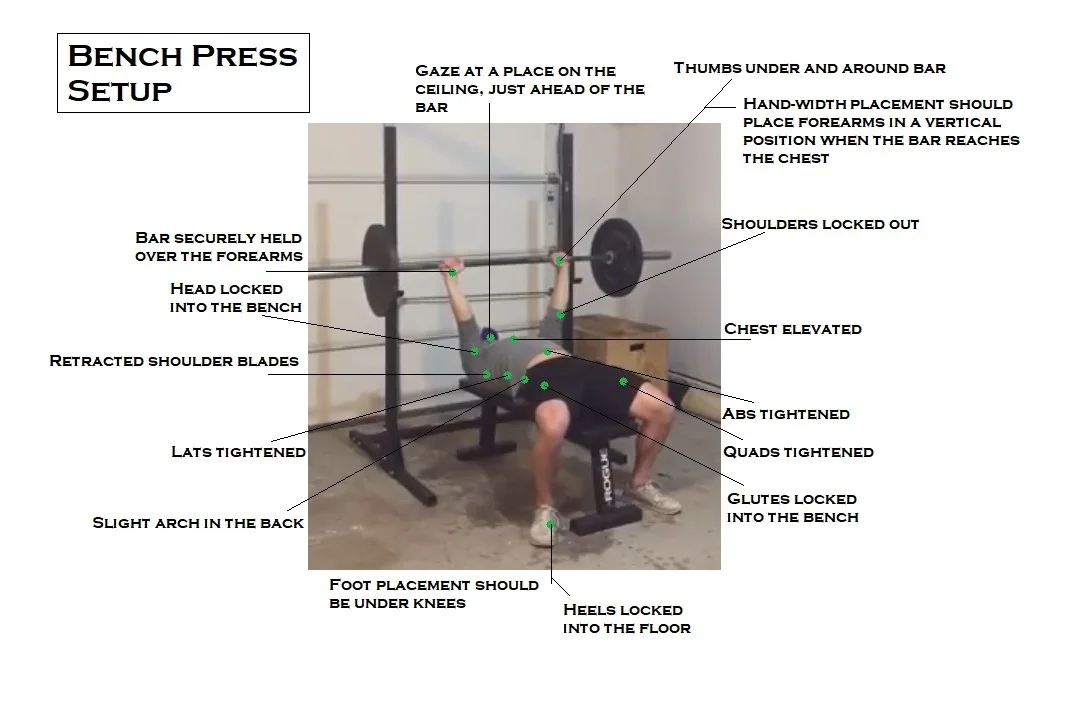
I think she's right! The deadlifts very well could have aided to the zero-back-pain issues. Here's my hypotheses: Three of the five items listed above can be directly combated by deadlifting. Someone with a good deadlift has the strength and musculature to withstand changes in COG; someone with a good deadlift can support extra weight on the body (a/k/a the basketball protruding from the belly); and someone with a good deadlift typically has good, or better-than-normal, posture, especially compared to someone who lacks sufficient training. The deadlift creates a pillar in your posterior chain to withstand stress!
Now, this isn't scientific data, and I'm surely not a doctor telling anyone what to do. (Disclaimer: Any trainer prescribing medical or medical-like guidance is a fool. Run from these people! And always, always, ALWAYS consult with a doctor before entering into any kind of fitness routine when pregnant. Most professionals will say continue to do what you were doing; however, there are always exceptions to the rule, and each person is different.) But I am bringing in a strength-guru's perspective. The deadlift is a powerful tool! One last thing: one can't just start doing deadlifting right before or during pregnancy; like any exercise, it takes time and perseverance to build strength.
Stay strong, moms and moms-to-be!

Weekend Warrior
The term "Weekend Warrior" and the word "stupid" should be synonymous, in our opinion. There's no need to sit on your butt all week and then attempt to display Herculean feats on the weekend. The body isn't designed to withstand this extreme off-on nature.
"...many people compress their weekly exercise volume into long periods of physical activity on the weekend. This intensity gave rise to the colloquial term 'weekend warrior...' Because long periods of intense physical activity on weekends is physically demanding, especially among unfit individuals, weekend warriors may be at an increased risk of injury." (https://www.ncbi.nlm.nih.gov/pmc/articles/PMC4035407/)
Did you know: "The Achilles tendon is the most frequently ruptured tendon in the body." (Kinesiology The Mechanics & Pathomechanics of Human Movement) This is *not* something you want. Trust us. Weekend Warriors unfortunately place this tendon and other body parts in harm's way to a greater degree than Weekly Workers. (We just made that up.) Other common Weekend Warrior injuries: plantar fasciitis, tennis elbow, and ankle sprains. A broken bone is also a possibility.
Many people think that a day or two of extreme physical activity on the weekend will offset nearly a week's worth of sedentary behavior. If this is you, you're in for a world of hurt; quite possibly, literally. The body is not equipped to be stationary for 5-6 days and then run, jump, and cut on a dime 1 day.
By following a training program, or applying a routine, the body becomes more healthy, it becomes more equipped to withstand the rigors of daily, weekly, and monthly endeavors. Our muscles, bones, and joints need to progressively load and acclimate to the stresses to be placed upon them.
Think of it like like (and bear with our analogy, as it's not perfect): Which of the two cars would run better or be more prone to withstand a breakdown? (Option 1) An automobile that was started, run, and watched after every day. (Option 2) An automobile that was started, run, and watched after once a week. Now, take both options, start them up, and force them into a quick acceleration, followed by abrupt stop-go movements, lasting for an hour. I'm not sure about you, but I'll go with Option 1.
The point is, some work done throughout the week is better than a whole lot of work done on the weekend. The research backs this up! No, you may not have a ton of time, but some time can likely be spent doing something. 5 minutes of sit-ups here, 10 minutes of push-ups and air squats there, or 15 minutes of walking or jogging there.
It's important to get into a routine, or to follow a plan. No, this won't negate all injuries, but your Achilles is at better odds of not rupturing by progressively overloading it throughout the week!
173 Reasons
"You don’t get to redefine the exercise and then claim that it’s dangerous. Driving a car is dangerous if you drive it into a great big rock."
-Mark Rippetoe, Starting Strength
Recklessly driving a car is bad; it's also incredibly stupid. Improperly lifting weights is bad; it too is also very stupid. Unfortunately, lifting seems to have a lasting stigma on so many people. "It's bad for your knees," they say. Perhaps it's because they don't enjoy lifting, or maybe they've never lifted, or it's possible they're incredibly insecure around lifters. Maybe I'm wrong. But what I do know is that when lifting is done right, there is far more good that comes from it than bad! Far more. When a car is driven right, the automobile serves a wonderful purpose, right? Or could you go about your day without it? (Public transportation folks, I hear you.)
Just for fun, here is one of 173 (I pulled that number from thin air, it's probably more) rebuttals we "lifters" can make about lifting being bad for the knees.
Sports and many of life's activities require abrupt stopping and quick turning. The impact of the immediate stop-go-turn activity can place a lot of valgus stress on the knee (see photo). On top of that, many of us are already predisposed to increased valgus; and, unfortunately, ladies actually have approximately 5 degrees more of this due to their anatomy. (Be careful the next time you're playing tag with the kids in the yard, ladies and gents!) How do we combat this? How do we lessen the likelihood of a sudden injury? We make the structure around the knee stronger. We lift! We deadlift and we squat.
There is something called the pes anserinus, and it is made up of three muscles, the sartorius, gracilis, and semitendinosus. These are muscles of the leg. According to the text Kinesiology, The Mechanics & Pathomechanics of Human Movement, "these three muscles together appear to contribute to the dynamic stabilization of the knee against valgus and rotary forces." How do we get these three muscles and their accompanying tendons stronger to withstand greater amounts of stress? Once again, we lift. We deadlift and we squat. Strength withstands greater stress.
Again, this is just one of *many* examples as to why lifting is beneficial to not just the knee, but the whole body!

1-Week High Intensity-Hypertrophy Program Sample
Yesterday we received a few messages about our High Intensity-Hypertrophy (muscle building) post. Here's a week-long sample of the program:
(Monday)
Strength:
Deadlift: 4 Sets x 8 Reps
*Sets 3 and 4 should be heavy. Hypothetically, if you were to perform more than 8 reps (which you're not), you should be able to execute only one or maybe two more reps on set 3 and 4.
Strength Stamina:
10-Minute, 5-Rep Squat EMOM
*Weight should begin to feel heavy around set 5 and 6. The sets should get difficult around 7 or 8. If you're unable to manage 5 reps across for the 10 sets, the weight was too heavy to begin with.
Conditioning Hypertrophy:
100 Dumbbell Snatches
*If you can execute 20 DB Snathces without fatigue, the weight is too light.
(Tuesday)
Strength:
Bench Press: 4 Sets x 8 Reps
*Sets 3 and 4 should be heavy. Hypothetically, if you were to perform more than 8 reps (which you're not), you should be able to execute only one or maybe two more reps on set 3 and 4.
Strength Stamina:
10-Minute, 5-Rep Overhead Press EMOM
*Weight should begin to feel heavy around set 5 and 6. The sets should get difficult around 7 or 8. If you're unable to manage 5 reps across for the 10 sets, the weight was too heavy to begin with.
Conditioning Hypertrophy:
20-Minute, AMRAP Pull-up-Burpee EMOM
Minute 1: AMRAP Pull-up
Minute 2: AMRAP Burpee
Minute 3: AMRAP Pull-up
Minute 4:AMRAP Burpee
...and so on and so forth, until the 10 sets of Pull-ups and 10 sets of Burpees are through.
*Scale Pull-ups with Inverted Rows
(Wednesday)
REST
(Thursday)
Strength:
Squat: 4 Sets x 8 Reps
*Sets 3 and 4 should be heavy. Hypothetically, if you were to perform more than 8 reps (which you're not), you should be able to execute only one or maybe two more reps on set 3 and 4.
Strength Stamina:
10-Minute, 5-Rep Deadlift EMOM
*Weight should begin to feel heavy around set 5 and 6. The sets should get difficult around 7 or 8. If you're unable to manage 5 reps across for the 10 sets, the weight was too heavy to begin with.
Conditioning Hypertrophy:
100 Plate Squat Presses
*Male 45#; Female 25#
(Friday)
Strength:
Overhead Press: 4 Sets x 8 Reps
*Sets 3 and 4 should be heavy. Hypothetically, if you were to perform more than 8 reps (which you're not), you should be able to execute only one or maybe two more reps on set 3 and 4.
Strength Stamina:
10-Minute, 5-Rep Bench Press EMOM
*Weight should begin to feel heavy around set 5 and 6. The sets should get difficult around 7 or 8. If you're unable to manage 5 reps across for the 10 sets, the weight was too heavy to begin with.
Conditioning Hypertrophy:
19-Minute Work-Rest EMOM
5 Barbell Rows
5 Box Jumps
AMRAP Dumbbell Overhead Presses
Minute 1: 5 Barbell Rows, followed by 5 Box Jumps, followed by AMRAP Dumbbell Overhead Presses for the remainder of the minute.
Minute 2: Rest
Minute 3: 5 Barbell Rows, followed by 5 Box Jumps, followed by AMRAP Dumbbell Overhead Presses for the remainder of the minute.
Minute 4: Rest
...and so on and so forth, until the 10 sets of work is through.
*Barbell weight should be moderate; you should not be able to hypothetically perform 12 reps in a row of the weight you're using. Dumbbell weight should be light to moderate; if you're performing over 20 reps in your AMRAP, you're either absolutely crushing it, or your weight is too light.
(Saturday)
20-Minute Run
(Sunday)
REST
Firm Foundation
Clay. Bricks. Both are comprised of the same material. However, if we were to build a house out of one, the brick's firm structure would be the most logical, and safest method for construction. Similarly, we want to build our "house," our body, with firmness. A loose muscle and a contracted muscle are both muscle, but only one provides functionality and protection during loaded movement.
When we lift, it's important to have zero loose ends. Our body should be rigid throughout a lift. If we execute a deadlift or an overhead press, for example, while not fortifying our core, two things can happen. (1) We can lose the ability to transfer power throughout our kinetic chain, as there is a force leak in our mid-section. (2) More importantly, we can injury ourselves. When weight is lifted, it applies pressure on the body. When a strut -- our in this case, contracted musculature -- is not locked in place, pressure produces undue stress on the unfortified area and can cause injury. In our example, a back injury is possible due to the lax in the core.
So the next time you pick up a weight, think brick, not clay. Contract your muscles for a stronger, safer lift!

The Often Forgotten Adductors
Try touching your ceiling. (After a brief warmup, of course.) Assuming your ceiling is higher than 8 ft., you likely had to take drop your hips slightly before leaping into the air. Why did the dip allow you to jump higher than a non-dip hop? Two words: stretch reflex. A stretch reflex is a muscular stretch immediately followed by a contraction. The stretched muscle stores elastic energy, and it is then released upon contraction.
You use this same stretch reflex during the squat (and most other lifts, for that matter). As you squat, a number of muscle groups work together as they stretch then contract -- the hamstrings, the glutes, the quads, and ... the often forgotten adductors.
The adductors, the muscles that line the inner thigh, play a vital role when extending the hips. Their importance shouldn't be neglected. But how do you garner their full force -- or, how do you put them into a stretched position? Answer: (1) Point your feet out at a 30-degree angle. (2) Shove our knees out over the line of your feet. As the thighs rotate outward to mirror the feet, the adductors elongate; and during the descent, they become fully stretched. After reaching full depth, a bounce out of the bottom occurs and the stretched adductors contract sending you to the upright, finished position. (If you were to squat with straight feet, would your adductors fire? Absolutely. But to a much lesser degree.)
Angles, positions, and placements matter when lifting. This is just one example of how a tweak here and an adjustment there result in greater muscular activation.
